Beginner Pu-erh guide · 3 distinct first experiences
The Best Pu-erh Tea for Beginners: 3 Clear Ways to Start
Compare three beginner Pu-erh teas by raw versus ripe processing, loose versus pressed format, taste direction, package size, brewing approach, and what each one teaches.
Our answer
Jinglong's loose ripe Pu-erh is the best overall first purchase because it skips cake-prying, measures easily, and offers a dark, rounded introduction to the category. Choose the NASLAPH ripe cake when you want to learn compressed-tea handling, or TAETEA 7542 when you specifically want the brighter, more bitter-sweet path of raw Pu-erh. Raw and ripe are different production routes, so the right first buy depends more on the experience you want than on age language.
As an Amazon Associate I earn from qualifying purchases. This does not change which products are selected.
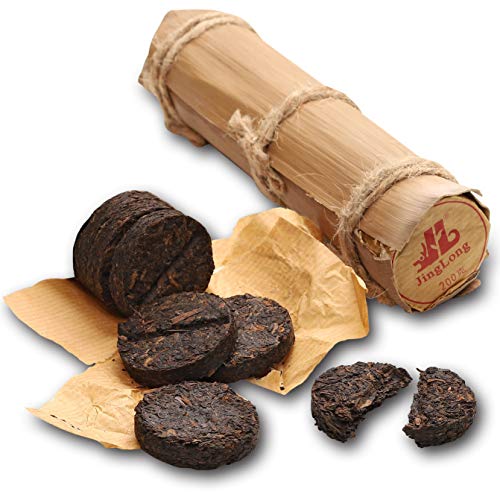 Jinglong Tea Factory - Pu-erh Tea in Bamboo Leaf Tube (80 Cups) Ripe Puerh Tea (7.1 Ounce)
The shortlist
3 picks, each for a different job
The rank matters less than the fit. Start with the role that matches how you actually make tea.
Best overall first Pu-erh
Jinglong Tea Factory - Pu-erh Tea in Bamboo Leaf Tube (80 Cups) Ripe Puerh Tea (7.1 Ounce)
The easiest entry point: loose ripe leaf needs no tea pick, tolerates near-boiling water, and establishes the dark, woody side of Pu-erh before you invest in cakes.
Read why it fits →Best first compressed ripe cake
Naslaph Organic Ripe Puerh Tea Cake, 6.35 Oz Yunnan Ancient Tree Pu er Tea Leaves Loose Leaf, Aged Fermented Black Puer Tea, Traditional Chinese Compressed Pu-erh Cake for Daily Drink, Easy to Brew
A manageable way to learn the cake ritual without starting with raw tea: pry a small section, watch it open, and follow the same leaf through several short infusions.
Read why it fits →Best first raw Pu-erh reference
TAETEA 7542 Classic Raw Pu-erh Tea, Aged Fermented Raw Puerh Tea Cake
The pick for drinkers who want raw Pu-erh's more vivid side: a recognizable factory recipe, compact cake, and a clear contrast with ripe tea.
Read why it fits →Side-by-side
Pu-erh Tea for Beginners: 3 Clear Ways to Start comparison
These are the product details that materially change how each pick works. Current prices stay on Amazon because they move.
| Pick | Style | Origin shown | Format | Package | Taste direction | Start brewing | Learning job | Best for |
|---|---|---|---|---|---|---|---|---|
| Best overall first Pu-erhJinglong Tea Factory - Pu-erh Tea in Bamboo Leaf Tube (80 Cups) Ripe Puerh Tea (7.1 Ounce) | Ripe / shou Pu-erh | Yunnan, China | Loose leaf in bamboo-leaf tube | 7.1 oz / 200 g | Earthy, woody, rounded | 3–5 g per 250 ml; 95–100°C | Recognize clean ripe Pu-erh | A first taste of Pu-erh |
| Best first compressed ripe cakeNaslaph Organic Ripe Puerh Tea Cake, 6.35 Oz Yunnan Ancient Tree Pu er Tea Leaves Loose Leaf, Aged Fermented Black Puer Tea, Traditional Chinese Compressed Pu-erh Cake for Daily Drink, Easy to Brew | Ripe / shou Pu-erh | Yunnan, China | Pressed tea cake | 6.35 oz / 180 g | Dark, smooth, earthy | 3–5 g per 250 ml; 95–100°C | Pry and open a ripe cake | Learning compressed tea |
| Best first raw Pu-erh referenceTAETEA 7542 Classic Raw Pu-erh Tea, Aged Fermented Raw Puerh Tea Cake | Raw / sheng Pu-erh | Yunnan, China | Pressed tea cake | 5.29 oz / 150 g | Brisk, bitter-sweet, aromatic | 3–5 g per 250 ml; 90–98°C | Compare raw with ripe | Exploring raw Pu-erh |
Detailed recommendations
Why each pick made the list
Each recommendation solves a specific brewing need, and every button opens the product shown.
#1 · Best overall first Pu-erh
Jinglong Tea Factory - Pu-erh Tea in Bamboo Leaf Tube (80 Cups) Ripe Puerh Tea (7.1 Ounce)
The easiest entry point: loose ripe leaf needs no tea pick, tolerates near-boiling water, and establishes the dark, woody side of Pu-erh before you invest in cakes.
- Tea identity
- 10.0
- Origin transparency
- 4.0
- Harvest & freshness
- 4.0
- Production detail
- 6.0
- Seller confidence
- 10.0
- Value for quality
- 8.0
- Style
- Ripe / shou Pu-erh
- Origin shown
- Yunnan, China
- Format
- Loose leaf in bamboo-leaf tube
- Package
- 7.1 oz / 200 g
- Taste direction
- Earthy, woody, rounded
- Start brewing
- 3–5 g per 250 ml; 95–100°C
- Learning job
- Recognize clean ripe Pu-erh
Why it fits
- No cake-prying required
- Clearly identified ripe style
- Enough leaf to compare several brewing approaches
Know before buying
- No harvest or batch date
- No pile-fermentation detail
- Bamboo packaging does not establish storage provenance
Best for: A first taste of Pu-erh · Simple mug or pot brewing · Dark and mellow flavor

#2 · Best first compressed ripe cake
Naslaph Organic Ripe Puerh Tea Cake, 6.35 Oz Yunnan Ancient Tree Pu er Tea Leaves Loose Leaf, Aged Fermented Black Puer Tea, Traditional Chinese Compressed Pu-erh Cake for Daily Drink, Easy to Brew
A manageable way to learn the cake ritual without starting with raw tea: pry a small section, watch it open, and follow the same leaf through several short infusions.
- Tea identity
- 10.0
- Origin transparency
- 10.0
- Harvest & freshness
- 8.0
- Production detail
- 10.0
- Seller confidence
- 4.0
- Value for quality
- 8.0
- Style
- Ripe / shou Pu-erh
- Origin shown
- Yunnan, China
- Format
- Pressed tea cake
- Package
- 6.35 oz / 180 g
- Taste direction
- Dark, smooth, earthy
- Start brewing
- 3–5 g per 250 ml; 95–100°C
- Learning job
- Pry and open a ripe cake
Why it fits
- Compact 180 g format
- Clearly identifies Yunnan ripe Pu-erh
- Compressed leaf changes visibly as it opens
Know before buying
- Requires a tea pick or careful alternative
- Ancient-tree claim lacks farm documentation
- No precise harvest or storage history
Best for: Learning compressed tea · Repeated short infusions · A smaller-than-standard cake

#3 · Best first raw Pu-erh reference
TAETEA 7542 Classic Raw Pu-erh Tea, Aged Fermented Raw Puerh Tea Cake
The pick for drinkers who want raw Pu-erh's more vivid side: a recognizable factory recipe, compact cake, and a clear contrast with ripe tea.
- Tea identity
- 10.0
- Origin transparency
- 4.0
- Harvest & freshness
- 8.0
- Production detail
- 10.0
- Seller confidence
- 6.0
- Value for quality
- 6.0
- Style
- Raw / sheng Pu-erh
- Origin shown
- Yunnan, China
- Format
- Pressed tea cake
- Package
- 5.29 oz / 150 g
- Taste direction
- Brisk, bitter-sweet, aromatic
- Start brewing
- 3–5 g per 250 ml; 90–98°C
- Learning job
- Compare raw with ripe
Why it fits
- Recognizable 7542 recipe
- Smaller 150 g cake
- Useful contrast with mellow ripe tea
Know before buying
- More bitterness and astringency
- Recipe number is not a quality guarantee
- Storage history is not fully documented
Best for: Exploring raw Pu-erh · A brighter and firmer cup · Learning a named factory recipe
A first Pu-erh tasting plan
Choose the experience, then learn one tea
Pu-erh becomes easier when raw versus ripe and loose versus pressed are treated as separate decisions. Start with one style, keep the dose steady, and compare infusions before buying another cake.
Choose ripe for mellow or raw for vivid
Ripe Pu-erh usually points toward dark wood, earth, and a rounded cup. Raw Pu-erh can be brighter, more aromatic, bitter, and astringent—especially when young. Neither is simply a better version of the other.
Compare raw and ripe Pu-erhChoose loose leaf or a cake
Loose leaf is simplest to measure. A cake adds the pleasure and learning curve of prying layers apart. Insert a tea pick sideways between layers and work away from your hand; do not stab downward toward your palm.
Begin in the middle of the brew range
For Western brewing, start with 3–5 g in 250 ml and near-boiling water, then shorten the steep if the cup is too forceful. For gongfu brewing, use a small vessel and brief infusions so you can follow the leaf as it opens.
Scale a Pu-erh recipeJudge storage with your senses
A clean earthy or woody aroma can be normal for ripe Pu-erh. Persistent chemical, rotten, or sharply moldy odors and visible fuzzy mold are reasons not to drink the tea. A quick rinse is optional and does not rescue compromised leaf.
Do not buy a story instead of a tea
Old date, ancient tree, famous mountain, and handmade claims need supporting provenance. Start with clearly identified style, producer, format, and clean storage rather than the most dramatic wrapper language.
Do not assume older always means better
Starting material, processing, storage conditions, and personal taste decide whether age helped. A younger clean tea can be a much better first purchase than an older cake with vague storage history.
Selection method
How we chose these products
“Best” means best fit for a defined tea-drinking job, based on comparable product data—not the product with the loudest retailer badge.
Separate raw from ripe first
Raw Pu-erh begins with sun-dried tea and transforms gradually during storage; ripe Pu-erh undergoes controlled wet-pile fermentation. We treated them as different tasting paths instead of ranking age language across both styles.
Give each pick a distinct first job
The shortlist covers easy loose ripe tea, a compact compressed ripe cake, and a recognizable raw factory recipe. Three useful starting points are better than several near-duplicate cakes.
Reward identity and usable disclosure
Tealefy scores tea identity, origin transparency, freshness information, production detail, seller confidence, and value for the intended use. Unsupported vintage, ancient-tree, or village language does not increase a score.
Balance package size with learning value
A beginner needs enough leaf to repeat a brew and adjust it, but not a collection-sized commitment. The pressed picks are 150–180 g rather than a standard 357 g cake.
Make the exact item recognizable
Each product name, image, ASIN, and Amazon destination refers to the same package. Check that the selected style and size still match before ordering because marketplace variations can share one product page.
Buying questions
Pu-erh Tea for Beginners: 3 Clear Ways to Start FAQ
What is the best Pu-erh tea for a beginner?
A loose ripe Pu-erh is the simplest first choice because it is easy to measure, needs no cake-prying, and usually gives a dark, rounded cup. Choose a small raw cake instead when you already know you enjoy briskness, bitterness, and watching a tea change across infusions.
Should a beginner buy raw or ripe Pu-erh?
Choose ripe Pu-erh for a mellow, earthy, woody direction and raw Pu-erh for a brighter, more aromatic, bitter-sweet direction. They use different production routes; ripe is not merely old raw tea, and raw does not become ripe as it ages.
Is loose Pu-erh or a tea cake better for beginners?
Loose Pu-erh is easier because you can weigh it directly. A cake is worthwhile when handling compressed tea is part of the experience you want. Begin with a smaller cake and use a tea pick carefully between the layers rather than forcing it downward.
Do I need to rinse Pu-erh tea?
No. A brief rinse is optional and can warm the vessel or help compressed leaf begin to open, but it is not a safety treatment and does not remove all caffeine. Never use a rinse to justify drinking tea with visible mold or a foul odor.
How do I brew Pu-erh tea for the first time?
For a simple mug or pot, start with 3–5 grams per 250 ml, use 95–100°C water for ripe Pu-erh or roughly 90–98°C for raw Pu-erh, and steep for about 2.5–4 minutes. If the cup is too strong, shorten the next steep before changing several variables at once.
Can Pu-erh tea be steeped more than once?
Yes. Whole-leaf Pu-erh commonly supports repeated infusions, especially in a small gongfu vessel. The useful number varies with leaf quality, dose, compression, and infusion time, so continue while the cup remains pleasant instead of expecting a fixed count.
Does older Pu-erh always taste better?
No. Age is only useful when the starting tea, processing, and storage were good. Poor or contaminated storage does not become desirable with time. Producer, batch, storage history, a clean aroma, and your preferred flavor matter more than a large year printed on a wrapper.
Does Pu-erh tea contain caffeine?
Yes. Both raw and ripe Pu-erh come from Camellia sinensis and contain caffeine. The amount in a cup changes with leaf dose, particle size, water temperature, time, serving size, and how many infusions you drink.
Product specification sources
- Jinglong Tea Factory ripe Pu-erh on AmazonAmazon · Exact ASIN, current product title, ripe style, 7.1-ounce package, and main product image.
- NASLAPH ripe Pu-erh cake on AmazonAmazon · Exact ASIN, current product title, ripe cake variation, 6.35-ounce package, Yunnan claim, and main product image.
- TAETEA 7542 raw Pu-erh cake on AmazonAmazon · Exact ASIN, current product title, raw 7542 identity, 150 g package, and main product image.
- Pu-erh tea: raw and ripe productionMinistry of Agriculture and Rural Affairs of the People's Republic of China · Yunnan raw-material context, the distinction between sun-dried raw and wet-piled ripe Pu-erh, compressed and loose forms, and baseline brewing guidance.
Keep exploring
Build the rest of your tea setup
Compare another gear category, calculate a starting recipe, or choose the tea itself.
Buying guide
The Best Hojicha Tea for Beginners
Compare three exact Japanese Hojicha products by roast, leaf material, package size, sourcing detail, and the beginner each one suits best.
Buying guide
The Best Loose-Leaf Tea for Beginners: 5 Easy Ways to Start
Compare five beginner-friendly loose-leaf teas by flavor, brewing difficulty, package size, equipment, caffeine context, and the skill each one helps you learn.
Buying guide
The Best Hot-Water Dispensers for Tea
Compare five exact hot-water boilers for tea by temperature presets, capacity, insulation, dispensing, timer controls and the household each one fits.
Buying guide
The Best Tea for Iced Tea: 5 Picks for Different Pitchers
Choose an exact tea for classic black iced tea, strong sweet tea, floral jasmine, tart hibiscus, or caffeine-free mugicha—with hot-brew and cold-brew guidance.
Buying guide
The Best Tea Samplers on Amazon for Five Different Ways to Explore Tea
Compare exact tea samplers for loose-leaf discovery, gift presentation, flavored blends, flowering tea, or easy everyday tea bags.
Buying guide
The Best Japanese Green Tea on Amazon for Five Different Cups
Compare exact Japanese teas for everyday sencha, umami-rich gyokuro, whisked matcha, toasted genmaicha, or roasted hojicha.
Buying guide
The Best Oolong Tea on Amazon for Five Different Cups
Compare exact oolong teas for roasted Dong Ding, floral Baozhong, Anxi Tieguanyin, fruit-forward Phoenix oolong, or mineral Wuyi rock tea.
Buying guide
The Best Matcha for Lattes on Amazon
Compare five exact matcha products for unsweetened lattes, one-powder versatility, easy café-style mixing, or frequent sweet-latte preparation.
Buying guide
The Best Black Tea on Amazon for Five Different Cups
Compare five black teas for malty strength, fragrant Darjeeling, bergamot citrus, a smooth breakfast cup, or pine smoke—with exact products you can buy.
Buying guide
The Best White Tea on Amazon for Five Different Ways to Drink It
Choose a white tea for a delicate Silver Needle cup, everyday White Peony, a pressed Shou Mei session, portioned Moonlight White, or bulk brewing.
Buying guide
The Best Green Tea on Amazon for Five Different Ways to Drink It
Choose a green tea for everyday loose-leaf brewing, whisked matcha, roasted-rice comfort, Chinese pan-fired character, or jasmine aroma without treating every green tea as interchangeable.
Buying guide
The Best Tea Gifts for Tea Lovers
Choose a useful tea gift by the recipient’s routine, from loose-leaf brewing and matcha to commuting, temperature control, and tea storage.
Buying guide
The Best Masala Chai on Amazon for Every Brewing Style
Choose a masala chai for traditional loose-leaf brewing, a fast unsweetened latte, or frequent bulk batches without buying three versions of the same thing.
Buying guide
The Best Matcha Powder on Amazon for Drinking, Lattes, and Baking
Choose an exact matcha powder for whisking with water, trying lattes and recipes, or making matcha frequently—without paying for the wrong grade or package size.
Buying guide
The Best Earl Grey Teas for Different Tastes
Choose an Earl Grey for loose-leaf brewing, easy tea bags, strong citrus, milk drinks, bulk value, or less caffeine.
Buying guide
The Best Matcha Sets for Home Preparation
Compare five matcha sets by included bowl, whisk type, sifter, whisk holder, pouring workflow, care needs, and what you still need to supply.
Buying guide
The Best Electric Tea Makers with Infusers
Compare five electric tea makers with built-in infusers by steep-stopping method, temperature control, tea capacity, keep-warm behavior, materials, and the tea routine each one suits.
Buying guide
The Best Milk Frothers for Matcha and Tea Lattes
Compare five milk frothers for matcha, chai, hojicha, and other tea lattes by heating method, foam control, working capacity, cleanup, and whether the tea belongs inside the device.
Buying guide
The Best Water Filter Pitchers for Tea
Compare five water filter pitchers for tea by certified reduction claims, capacity, filter life, mineral and TDS effects, and the source-water problem each one actually solves.
Buying guide
The Best Thermometers for Tea
Compare five thermometers for tea by documented accuracy, response time, range, water protection, probe design, and the brewing setup each one suits best.
Buying guide
The Best Iced Tea Makers
Compare five exact iced tea makers by brew path, finished capacity, filter design, body material, chilling method, cleaning, and the batch each one suits.
Buying guide
The Best Mug Warmers for Tea
Compare five exact mug warmers for tea by heating system, capacity, temperature control, off-coaster use, lid, care, and the routine each one suits best.
Buying guide
The Best Travel Mugs for Tea
Compare five exact travel mugs for tea by capacity, brewing method, drinking lid, interior finish, heat-retention claim, cleaning, and commute fit.
Buying guide
The Best Stovetop Kettles for Tea
Compare five stovetop tea kettles by usable capacity, body material, whistle, cooktop compatibility, care, and the brewing workflow each one suits best.
Buying guide
The Best Electric Kettles for Tea
Compare five electric kettles for tea by temperature range, capacity, hold time, pour style, materials, and the tea drinker each one suits best.
Buying guide
The Best Tea Infusers for Loose-Leaf Tea
Compare five loose-leaf tea infusers by leaf room, filtration, materials, drip control, cleaning, and the tea styles each design handles best.
Buying guide
The Best Teapots for Loose-Leaf Tea
Compare five teapots for loose-leaf tea by capacity, body material, filter design, steep-stopping method, cleaning, and ideal serving size.
Buying guide
The Best Tea Scales for Loose-Leaf Tea
Compare five tea scales by usable resolution, capacity, timer behavior, power, platform size, and the brewing workflow each one handles best.
Buying guide
The Best Tea Storage Containers
Compare five tea storage canisters by capacity, body material, closure, light protection, care, and the type of leaf each container stores best.