Herbal tea guide
Peppermint
Mentha × piperita · Cultivated widely
What is Peppermint?
Peppermint is a herbal profile associated with Cultivated widely. It is made from Mentha × piperita and described here by flavors including menthol, cool herbs, and clean finish.
Handpicked tea to buy
Three Peppermint picks for different priorities
Choose by the job: provenance-first, best overall balance, or an everyday format. Each product image and button opens the exact Amazon package shown.

Premium Peppermint pick
Premium pick · Peppermint · 81/100
Traditional Medicinals Peppermint
Amazon listing: Traditional Medicinals Organic Peppermint, 16 Tea Bags Helps Soothe Belly from Occasional Gas and Bloating, Kosher, Non-GMO, Caffeine-Free, Compostable
Best for buyers who prioritize provenance and production detail. This option provides the strongest available combination of origin, harvest or grade, processing, and leaf-format information.
- Brand
- Traditional Medicinals
- Form
- Tea bags
- Stated origin
- Cultivated widely
Product details and sources
- peppermint product page on AmazonAmazon · The current Amazon page for the same product and package shown here.
- Peppermint options on AmazonAmazon · Alternative products used to compare sourcing detail, customer feedback, format, and value.
As an Amazon Associate I earn from qualifying purchases. Product information updated October 18, 2026.

Best overall Peppermint pick
Best overall · Peppermint · 83/100
Twinings Peppermint · 100 Count
Amazon listing: Twinings Pure Peppermint Herbal Tea Individually Wrapped Bags, 100 Count (Pack of 1), Fresh Minty Flavour, Naturally Caffeine-Free, Enjoy Hot or Iced, 100 Teabags
The strongest all-around choice for most buyers, balancing clear tea identity, sourcing detail, seller confidence, practical format, and value.
- Brand
- Twinings
- Package
- 100 Count
- Form
- Tea bags
- Stated origin
- Cultivated widely
Product details and sources
- peppermint product page on AmazonAmazon · The current Amazon page for the same product and package shown here.
- Peppermint options on AmazonAmazon · Alternative products used to compare sourcing detail, customer feedback, format, and value.
As an Amazon Associate I earn from qualifying purchases. Product information updated October 18, 2026.
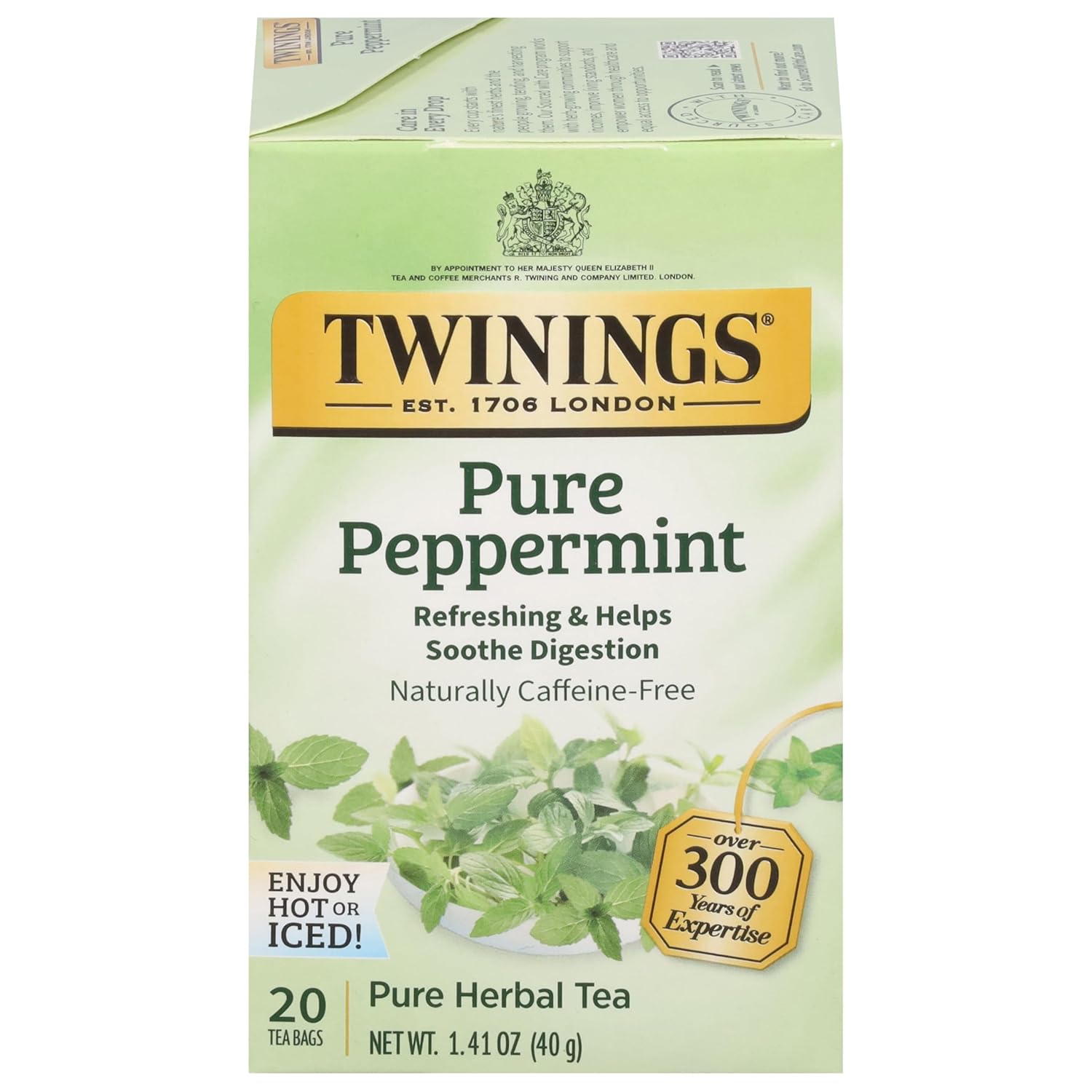
Popular everyday Peppermint pick
Popular everyday pick · Peppermint · 83/100
Twinings Peppermint · 20 Count
Amazon listing: Twinings Pure Peppermint Herbal Tea Individually Wrapped Bags, 20 Count (Pack of 1), Fresh Minty Flavour, Naturally Caffeine-Free, Enjoy Hot or Iced, 20 Teabags
A practical everyday choice for buyers who value broad customer interest while still keeping the tea style and package clearly identified.
- Brand
- Twinings
- Package
- 20 Count
- Form
- Tea bags
- Stated origin
- Cultivated widely
Product details and sources
- peppermint product page on AmazonAmazon · The current Amazon page for the same product and package shown here.
- Peppermint options on AmazonAmazon · Alternative products used to compare sourcing detail, customer feedback, format, and value.
As an Amazon Associate I earn from qualifying purchases. Product information updated October 18, 2026.
The short version
Peppermint at a glance
Start here for the facts most people need, then use the guide for context.
Herbal
Mentha × piperita
menthol, cool herbs, and clean finish
Sensory descriptors, not necessarily added ingredients.
95–100°C · 5–8 min
1.5–3 g leaf per 250 ml.
Naturally caffeine-free when unblended
Naturally caffeine-free when unblended.
Identity and classification
How is Peppermint classified?
This map separates the named drink from its tea family, source plant and place of origin.
Peppermint
Mentha × piperita
Herbal
Wikidata Q379932Mentha × piperita
Multi-region
A Mentha aquatica × Mentha spicata hybrid associated with Europe to Central Asia and now widely cultivated
- Processing identity
- Dried leaves infused
- Also known as
- peppermint leaf
Name, language and meaning
How do you pronounce Peppermint?
Use the simple guide for an English approximation, then the language note for the original name.
- Original name
- Mentha × piperita
- Romanization
- Peppermint
- Other forms
- peppermint leaf
This is a practical English reading guide. Accent and regional-language pronunciation can vary; the native or botanical name is included so the term can be checked rather than guessed from spelling alone.
What does the name mean?
Peppermint is the common name for the accepted hybrid Mentha × piperita, derived from water mint and spearmint. A package labeled only mint may contain peppermint, spearmint or a blend.
Visual field guide
What does Peppermint look like?
Each image is selected for identification, not decoration. The subject, creator, original file, and reuse license remain attached to the image.
 Source plant
Mentha × piperita, the plant associated with Peppermint.
Photo: H. Zell · CC BY-SA 3.0
- Creator
- H. Zell
- License
- CC BY-SA 3.0; this optimized copy is published under the same terms.
- Original
- Mentha x piperita 001.JPG
- Identification
- Reference page · Selected from the reference article for Peppermint; the source file and license are linked below.
Cup character
What does Peppermint taste like?
The profile uses menthol, cool herbs, and clean finish as practical tasting cues. Harvest, storage, water, dose and technique can shift what appears in a particular cup.
Flavor notes to look for
Why does it taste that way?
Dried leaves infused
Identity and production
Where does Peppermint come from, and how is it made?
This profile connects the named style with its documented place, plant material and processing rather than treating origin as decoration.
- Origin
- Cultivated widely
- Origin group
- Multi-region
- Region
- A Mentha aquatica × Mentha spicata hybrid associated with Europe to Central Asia and now widely cultivated
- Plant
- Mentha × piperita
- Native name
- Mentha × piperita
- Also called
- peppermint leaf
- Processing
- Dried leaves infused
Documented history and living practice
What is the history and tradition of Peppermint?
Peppermint is the accepted hybrid Mentha aquatica × Mentha spicata and became a widely traded culinary and infusion herb. It is distinct from spearmint even though the names are casually interchanged. Peppermint's cooling sensation comes from aromatic chemistry, not from actual low temperature. It is naturally caffeine-free when pure, but chocolate-mint blends, black-tea blends and wellness products require an ingredient check.
Peppermint is the accepted hybrid Mentha aquatica × Mentha spicata and became a widely traded culinary and infusion herb. It is distinct from spearmint even though the names are casually interchanged. The reliable starting point is the named plant, place and process—not a dramatic origin story repeated without a dated source. For this profile, the geographic context is A Mentha aquatica × Mentha spicata hybrid associated with Europe to Central Asia and now widely cultivated, Multi-region.
Peppermint's cooling sensation comes from aromatic chemistry, not from actual low temperature. It is naturally caffeine-free when pure, but chocolate-mint blends, black-tea blends and wellness products require an ingredient check. The production record describes it as dried leaves infused. That wording matters because a shared tea color or retail category can hide different harvest material, oxidation, roast, scenting, fermentation or added ingredients.
Fresh or dried leaves are steeped as an after-meal or caffeine-free cup, alone or in blends. Strong boiling and long holding can make the aroma flatter rather than fresher. Today the name appears across specialty shops, tea bags, blends and ready-to-drink products. Those formats are not interchangeable: the ingredient list, producer, origin, harvest or packing date and physical form determine what is actually being brewed.
Peppermint is recognized
The sterile hybrid is propagated vegetatively rather than treated as ordinary seed-grown spearmint.
Commercial cultivation expands
Peppermint oil and dried leaf become important flavoring materials.
A familiar infusion
The herb spreads through confectionery, culinary and after-meal drink traditions.
Pure leaf and blends
Tea bags, loose leaf and flavored mixtures use the same common name.
Where is it enjoyed?
Fresh or dried leaves are steeped as an after-meal or caffeine-free cup, alone or in blends. Strong boiling and long holding can make the aroma flatter rather than fresher.
How people prepare and share it
- Fresh or dried leaves are steeped as an after-meal or caffeine-free cup, alone or in blends. Strong boiling and long holding can make the aroma flatter rather than fresher.
- For a Western-style starting point, use 1.5–3 g per 250 ml, water at 95–100°C, and 5 min–8 min. This is a starting range rather than a claim that every producer's leaf extracts identically.
- Serve it in a neutral, clean vessel for the first tasting and look for menthol, cool herbs and clean finish. These are resemblance terms, not proof that those foods, flowers or flavorings were added. Check the ingredient list whenever the product is blended, scented, powdered or bottled.
Sources for this history and pronunciation guide
- Mentha × piperita L.Kew Science, Plants of the World Online · Accepted botanical identity and documented native distribution relevant to Peppermint; it does not establish a medical benefit.
- Eating, Diet, & Nutrition for GER & GERDNIDDK · General guidance that emphasizes identifying personal triggers.
Starting ranges
How do you brew Peppermint?
Start in the middle of a range, taste the cup, and change one variable at a time.
Western / mug style
| Water | 95–100°C (203–212°F) |
|---|---|
| Leaf | 1.5–3 g per 250 ml |
| Time | 5–8 min |
Quality, labels and storage
How do you choose good Peppermint?
Use origin, processing and freshness information before relying on grade words or packaging.
Look for
- A specific origin or producer supporting the Cultivated widely identity
- Processing described as dried leaves infused
- A clean aroma consistent with menthol, cool herbs and clean finish, without damp, musty or stale notes
- An ingredient list and physical form that match the tea described on this page
Labels worth knowing
- Mentha × piperita: accepted hybrid
- peppermint leaf: caffeine-free when pure
- mint tea: ambiguous without species and ingredients
Warning signs
- A premium price supported only by the style name, with no producer or origin detail
- Added flavor, sweetener or another caffeinated ingredient hidden behind a generic “tea” description
- Medical, detox, weight-loss or guaranteed-effect language presented as a substitute for product identity
- A vintage, harvest, cultivar or protected-origin claim with no traceable seller evidence
Freshness and storage
Buy aromatic material in quantities you can finish. Keep it dry, sealed and away from light and heat; discard material with moisture, webbing, visible contamination or an odor that no longer matches the named plant or grain.
See the researched product pick ↓Choose by difference
What teas are similar to Peppermint?
These comparisons explain the nearest practical alternatives instead of listing more teas at random.
Herbal
Spearmint
Spearmint is dried leaves infused and is associated with Cultivated widely. Compare its cool mint and sweet herbs cues with Peppermint's menthol and cool herbs profile.
- Origin
- Cultivated widely
- Flavor cues
- cool mint, sweet herbs, green finish
Herbal
Lemongrass
Lemongrass is fresh or dried leaves and stems infused and is associated with South India and Sri Lanka / widely cultivated. Compare its lemon peel and green herbs cues with Peppermint's menthol and cool herbs profile.
- Origin
- South India and Sri Lanka / widely cultivated
- Flavor cues
- lemon peel, green herbs, ginger-like warmth
Herbal
Chamomile
Chamomile is dried flower heads infused and is associated with Cultivated widely. Compare its apple and wildflower cues with Peppermint's menthol and cool herbs profile.
- Origin
- Cultivated widely
- Flavor cues
- apple, wildflower, soft hay
Health questions with practical consequences
Is Peppermint safe with kidney disease, reflux or medicines?
These are the questions most likely to change whether, when, or how someone drinks this tea. The evidence indicator shows how directly research matches the exact tea and question.
Kidney failure / dialysis
Individual renal planIs Peppermint safe for someone with kidney failure or on dialysis?
It is caffeine-free when the product is unblended, but that does not establish renal safety. Kidney-failure plans differ by dialysis type, laboratory results, fluid allowance and medicines, so count this drink toward the plan and ask the renal dietitian or nephrologist.
Kidney stones / oxalate
Varies by brew and patientIs Peppermint low in oxalate or safe for kidney stones?
No validated oxalate value is assigned to this exact ingredient and brew. Caffeine-free does not mean oxalate-free, so a stone-prevention plan should use measured product information when oxalate restriction matters.
Acid reflux / GERD
May aggravate refluxCan Peppermint aggravate acid reflux or GERD?
Yes, mint is a recognized personal reflux trigger for some people. A small serving or avoiding it may be appropriate when symptoms reliably follow mint.
Caffeine / sleep
Caffeine-free when pureDoes Peppermint contain caffeine, and can it affect sleep?
Naturally caffeine-free when unblended. Check blends and ready-to-drink products because added tea, guarana, mate or other ingredients can change that.
Pregnancy / medicines / allergies
Check personal compatibilityCan Peppermint interact with medicines, pregnancy needs or allergies?
Caffeine is not the main concern when this is unblended. Compatibility still depends on dose, product ingredients, medicines and medical history; check regular medicinal use with a clinician or pharmacist.
These statuses organize evidence; they do not diagnose, prescribe or replace a renal dietitian, physician or pharmacist.
Practical answers
Common questions about Peppermint
Short answers for choosing, preparing and storing this tea, with the fuller context elsewhere in the guide.
How do you pronounce Peppermint?
A practical English guide is “PEP-er-mint.” The native or technical form shown on this page is Mentha × piperita. Pronunciation does not establish origin, grade or authenticity, so use the accompanying identity information as well.
What does Peppermint taste like?
Peppermint is commonly described with menthol, cool herbs, and clean finish notes. These are sensory comparisons, not necessarily added ingredients, and the result changes with origin, freshness, water and brewing.
What should I check before buying Peppermint?
Confirm the product form, ingredients, producer and the claimed origin of Cultivated widely. Then look for the profile-specific labels and warning signs above. A famous name, unusual color, high price, marketplace rating or health promise cannot replace traceable identity and fresh, clean material.
How should a beginner brew Peppermint?
Start with 1.5–3 g per 250 ml at 95–100°C for 5 min–8 min. Taste before adding more heat or time, then change one variable at a time. The calculator can rescale the leaf and water while preserving the same starting ratio.
What kind of tea is Peppermint?
Peppermint is a herbal infusion made from Mentha × piperita, rather than a true tea made from Camellia sinensis.
Does Peppermint contain caffeine?
Naturally caffeine-free when unblended.
What temperature and time should I use for Peppermint?
A practical Western-style starting range is 95–100°C (203–212°F) for 5–8 minutes, using 1.5–3 g per 250 ml. Adjust one variable at a time after tasting.
Evidence in context
What does research say about Peppermint?
Research is separated from tradition, marketing and assumptions about one untested cup.
Research summary
Evidence for peppermint oil products is not automatically evidence for peppermint tea.
Safety and practical cautions
Mint may be a personal reflux trigger.
Traceable reading
Which sources support this Peppermint guide?
Each source is labeled by scope so category-level research is not mistaken for proof about a named style.
- Eating, Diet, & Nutrition for GER & GERDNIDDK · General guidance that emphasizes identifying personal triggers.
Useful equipment
Tools for brewing Peppermint
Products matched to measurement, temperature or vessel needs for this style.

Best starter tea scale
Tea scales
KitchenTour Coffee Scale with Timer
A 0.1 g readout and built-in timer make leaf ratios and infusion timing easier to reproduce.

Best everyday value
Electric kettles
COSORI 1.7 L Glass Electric Kettle
The straightforward value pick when you mainly need fast boiling water, auto shutoff, and a wide opening for cleaning.

Best controlled-pour value
Electric kettles
COSORI Electric Gooseneck Kettle
Five presets, stainless-steel water contact surfaces, controlled pouring, and a 60-minute hold make it useful across tea styles.
Affiliate disclosure: As an Amazon Associate I earn from qualifying purchases.
Continue exploring
Related herbal teas
Compare nearby styles to understand what makes Peppermint distinctive.