Herbal tea guide
Yerba Mate
Ilex paraguariensis · South America
What is Yerba Mate?
Yerba Mate is a herbal profile associated with South America. It is made from Ilex paraguariensis and described here by flavors including green wood, tobacco, and bittersweet.
Handpicked tea to buy
Three Yerba Mate picks for different priorities
Choose by the job: provenance-first, best overall balance, or an everyday format. Each product image and button opens the exact Amazon package shown.

Premium Yerba Mate pick
Premium pick · Yerba Mate · 83/100
ECOTEAS Yerba Mate · 1 lb
Amazon listing: ECOTEAS Organic Yerba Mate Unsmoked Loose Tea Pure Leaf Cut 1 lb Pack of 2 Air-dried smoke-free pure loose leaf stem-free 2 lb, USDA organic kosher non-GMO gluten free, smooth natural caffeine
Best for buyers who prioritize provenance and production detail. This option provides the strongest available combination of origin, harvest or grade, processing, and leaf-format information.
- Brand
- ECOTEAS
- Package
- 1 lb
- Form
- Loose leaf
- Stated origin
- South America
Product details and sources
- yerba-mate product page on AmazonAmazon · The current Amazon page for the same product and package shown here.
- Yerba Mate options on AmazonAmazon · Alternative products used to compare sourcing detail, customer feedback, format, and value.
As an Amazon Associate I earn from qualifying purchases. Product information updated October 18, 2026.

Best overall Yerba Mate pick
Best overall · Yerba Mate · 83/100
CRUZ DE MALTA Yerba Mate · 1kg
Amazon listing: Cruz de Malta Yerba Mate Tea – 1kg (2.2 lbs) Loose Leaf – Traditional Argentine Herbal Tea – Smooth Flavor, Naturally Sourced – USA Specific Packaging – Gluten-Free – Large Leaf Low Dust Yerba Mate
The strongest all-around choice for most buyers, balancing clear tea identity, sourcing detail, seller confidence, practical format, and value.
- Brand
- CRUZ DE MALTA
- Package
- 1kg
- Form
- Loose leaf
- Stated origin
- South America
Product details and sources
- yerba-mate product page on AmazonAmazon · The current Amazon page for the same product and package shown here.
- Yerba Mate options on AmazonAmazon · Alternative products used to compare sourcing detail, customer feedback, format, and value.
As an Amazon Associate I earn from qualifying purchases. Product information updated October 18, 2026.
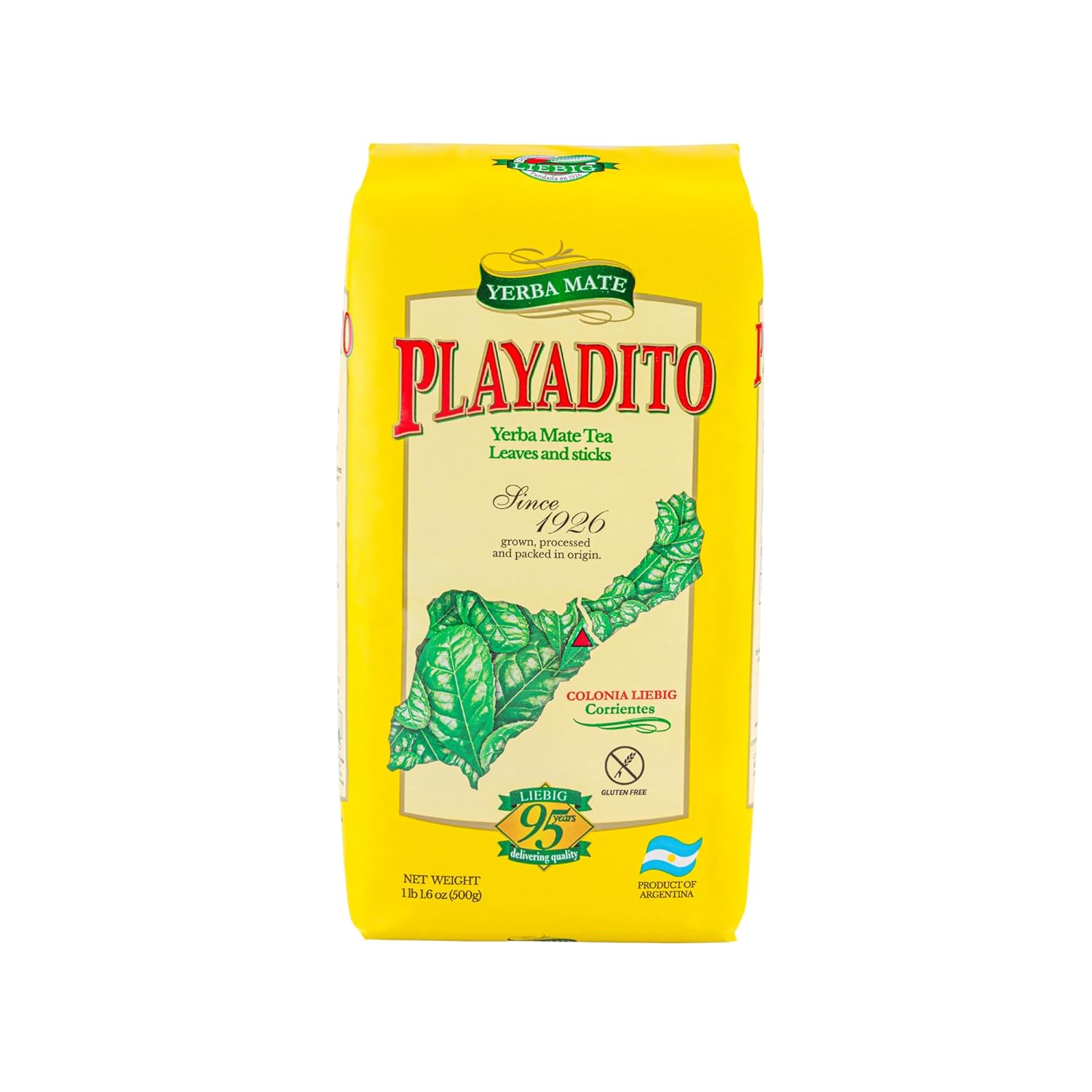
Popular everyday Yerba Mate pick
Popular everyday pick · Yerba Mate · 80/100
Playadito Yerba Mate
Amazon listing: Yerba Mate Playadito 500gm
A practical everyday choice for buyers who value broad customer interest while still keeping the tea style and package clearly identified.
- Brand
- Playadito
- Form
- Loose leaf
- Stated origin
- South America
Product details and sources
- yerba-mate product page on AmazonAmazon · The current Amazon page for the same product and package shown here.
- Yerba Mate options on AmazonAmazon · Alternative products used to compare sourcing detail, customer feedback, format, and value.
As an Amazon Associate I earn from qualifying purchases. Product information updated October 18, 2026.
The short version
Yerba Mate at a glance
Start here for the facts most people need, then use the guide for context.
Herbal
Ilex paraguariensis
green wood, tobacco, and bittersweet
Sensory descriptors, not necessarily added ingredients.
70–85°C · 3–5 min
3–6 g leaf per 250 ml.
Caffeinated; amount varies
Naturally caffeinated and potentially substantial depending on serving tradition.
Identity and classification
How is Yerba Mate classified?
This map separates the named drink from its tea family, source plant and place of origin.
Yerba Mate
yerba mate / ka'a
Wikidata Q203540Herbal
Wikidata Q379932Ilex paraguariensis
Southern South America
Paraguay, Argentina and southern Brazil
- Processing identity
- Leaves and stems dried, sometimes smoke-dried, and aged
- Also known as
- SHEHR-bah MAH-teh in much of Argentina and Uruguay, erva-mate in Portuguese
Name, language and meaning
How do you pronounce Yerba Mate?
Use the simple guide for an English approximation, then the language note for the original name.
- Original name
- yerba mate / ka'a
- Romanization
- yerba mate
- IPA
- /ˈʝeɾβa ˈmate/
- Other forms
- SHEHR-bah MAH-teh in much of Argentina and Uruguay; erva-mate in Portuguese
Spanish mate ends ‘mah-teh,’ not English ‘mate.’ Rioplatense Spanish often gives yerba an initial sh or zh sound.
What does the name mean?
Yerba means herb in Spanish; mate names the drinking vessel through a word derived from Quechua. In Guaraní, ka'a means herb and is central to the plant's Indigenous identity.
Visual field guide
What does Yerba Mate look like?
Each image is selected for identification, not decoration. The subject, creator, original file, and reuse license remain attached to the image.
 Botanical reference
A botanical illustration of Ilex paraguariensis, the yerba mate plant.
Photo: Franz Eugen Köhler, Köhler's Medizinal-Pflanzen · Public domain
- Creator
- Franz Eugen Köhler, Köhler's Medizinal-Pflanzen
- License
- Public domain; this optimized copy is published under the same terms.
- Identification
- Reference page · Selected from the reference article for Yerba mate; the source file and license are linked below.
Cup character
What does Yerba Mate taste like?
The profile uses green wood, tobacco, and bittersweet as practical tasting cues. Harvest, storage, water, dose and technique can shift what appears in a particular cup.
Flavor notes to look for
Why does it taste that way?
Leaves and stems dried, sometimes smoke-dried, and aged
Identity and production
Where does Yerba Mate come from, and how is it made?
This profile connects the named style with its documented place, plant material and processing rather than treating origin as decoration.
- Origin
- South America
- Origin group
- Southern South America
- Region
- Paraguay, Argentina and southern Brazil
- Plant
- Ilex paraguariensis
- Native name
- yerba mate / ka'a
- Also called
- SHEHR-bah MAH-teh in much of Argentina and Uruguay, erva-mate in Portuguese
- Processing
- Leaves and stems dried, sometimes smoke-dried, and aged
Documented history and living practice
What is the history and tradition of Yerba Mate?
Yerba mate is a living Guaraní inheritance and a major culture of Paraguay, Argentina, Uruguay and southern Brazil. Its history also contains colonial prohibition, Jesuit cultivation, state monopolies, land concentration and exploited mensú labor.
Guaraní communities used Ilex paraguariensis before European colonization for infusion, exchange and ritual. UNESCO's Paraguayan cultural-landscape account describes yerba mate as a direct Indigenous inheritance rooted in the Interior Atlantic Forest.
Early Jesuit authorities first opposed and later cultivated and traded mate. Colonial encomienda and later extractive systems forced Indigenous and creole workers into difficult forest labor. In the late nineteenth and early twentieth centuries, debt-bound mensú workers remained central to production.
Today mate is consumed across social classes and national borders. Hot mate, cold tereré, roasted mate and tea-bag preparations differ. Sharing a gourd remains a strong practice, while bottled and energy-drink products create new forms with different caffeine and ingredient profiles.
Guaraní use
Ka'a is consumed and exchanged within Indigenous communities of the Atlantic Forest region.
Colonial and Jesuit systems
Use spreads while cultivation and trade become tied to missions and coerced labor.
State and corporate extraction
Land concentration and mensú debt labor shape regional production.
National and diasporic drink
Mate and tereré remain social rituals while exports and ready-to-drink products expand.
Where is it enjoyed?
A gourd is filled with leaf and shared through a filtered bombilla, with one server adding water for each person. Cold tereré is especially important in Paraguay and neighboring regions.
How people prepare and share it
- A cebador prepares and refills the gourd, passing it to each person. The bombilla remains in place; moving it can disturb the leaf bed and the serving rhythm.
- Water is hot but normally below a rolling boil. The same leaf is refilled many times until it becomes lavado—washed out and weak.
- Paraguayan tereré uses cold water and may include crushed herbs called pohã ñana. It is not simply iced hot mate and has its own UNESCO-recognized cultural practice.
Sources for this history and pronunciation guide
- Yerba Mate Cultural LandscapeUNESCO World Heritage Centre · Guaraní origins, colonial and labor history, production landscapes, mate and tereré culture.
- Jesuit Missions of La Santísima Trinidad de Paraná and Jesús de TavarangueUNESCO World Heritage Centre · Yerba mate cultivation within the Guaraní-Jesuit mission context.
Starting ranges
How do you brew Yerba Mate?
Start in the middle of a range, taste the cup, and change one variable at a time.
Western / mug style
| Water | 70–85°C (158–185°F) |
|---|---|
| Leaf | 3–6 g per 250 ml |
| Time | 3–5 min |
Quality, labels and storage
How do you choose good Yerba Mate?
Use origin, processing and freshness information before relying on grade words or packaging.
Look for
- Country and producer
- Leaf, stem and powder composition
- Smoke-drying disclosure where relevant
- A clean herbal, woody or toasted aroma
Labels worth knowing
- con palo: with stems
- sin palo: little or no stem
- barbacuá: traditional fire-drying system
- tereré: cold preparation
Warning signs
- Energy-drink claims treated as traditional mate evidence
- No caffeine context
- A persistent chemical or moldy odor
- Smoke level hidden from buyers sensitive to it
Freshness and storage
Keep yerba dry and sealed. Traditional packages can be large, so buy a size you will use before aroma becomes flat.
See the researched product pick ↓Choose by difference
What teas are similar to Yerba Mate?
These comparisons explain the nearest practical alternatives instead of listing more teas at random.
Black
Assam
Both are caffeinated, but Assam is Camellia sinensis brewed as leaf tea rather than a repeatedly refilled South American holly.
- Origin
- India
- Flavor cues
- malt, raisin, brisk tannin
Herbal
Barley Tea (Mugicha / Boricha)
Both are major everyday regional drinks, but barley tea is a caffeine-free roasted-grain infusion.
- Origin
- East Asia
- Flavor cues
- roasted grain, toast, light bitterness
Herbal
Rooibos
Rooibos is caffeine-free and South African; mate is caffeinated and rooted in the Río de la Plata and Guaraní world.
- Origin
- South Africa
- Flavor cues
- vanilla, cedar, soft fruit
Health questions with practical consequences
Is Yerba Mate safe with kidney disease, reflux or medicines?
These are the questions most likely to change whether, when, or how someone drinks this tea. The evidence indicator shows how directly research matches the exact tea and question.
Kidney failure / dialysis
Individual renal planIs Yerba Mate safe for someone with kidney failure or on dialysis?
It contains caffeine, but that does not establish renal safety. Kidney-failure plans differ by dialysis type, laboratory results, fluid allowance and medicines, so count this drink toward the plan and ask the renal dietitian or nephrologist.
Acid reflux / GERD
Possible triggerCan Yerba Mate aggravate acid reflux or GERD?
Possibly. Caffeine-containing drinks are personal triggers for some people; liquor pH alone cannot establish GERD safety.
Caffeine / sleep
CaffeinatedDoes Yerba Mate contain caffeine, and can it affect sleep?
Yes. Naturally caffeinated and potentially substantial depending on serving tradition. Dose, serving size and timing matter; people who are sensitive should move it earlier or choose a verified caffeine-free product.
Pregnancy / medicines / allergies
Check personal compatibilityCan Yerba Mate interact with medicines, pregnancy needs or allergies?
Caffeine limits may apply in pregnancy. Available evidence does not establish compatibility with every medicine or health condition; check regular medicinal use with a clinician or pharmacist.
These statuses organize evidence; they do not diagnose, prescribe or replace a renal dietitian, physician or pharmacist.
Practical answers
Common questions about Yerba Mate
Short answers for choosing, preparing and storing this tea, with the fuller context elsewhere in the guide.
Why is Yerba Mate shared from one gourd?
The shared vessel and one server organize hospitality, conversation and equality within the group. Individual gourds are also common, especially where hygiene or personal preference calls for them.
What is the difference between Mate and tereré?
Mate is usually prepared with hot water. Tereré is a Paraguayan cold preparation and may use an herb-infused water. Both use yerba mate but have distinct serving traditions.
Does Yerba Mate contain caffeine?
Naturally caffeinated and potentially substantial depending on serving tradition.
What kind of tea is Yerba Mate?
Yerba Mate is a herbal infusion made from Ilex paraguariensis, rather than a true tea made from Camellia sinensis.
What does Yerba Mate taste like?
Yerba Mate is commonly described with green wood, tobacco, and bittersweet notes. These are sensory comparisons, not necessarily added ingredients, and the result changes with origin, freshness, water and brewing.
What temperature and time should I use for Yerba Mate?
A practical Western-style starting range is 70–85°C (158–185°F) for 3–5 minutes, using 3–6 g per 250 ml. Adjust one variable at a time after tasting.
Evidence in context
What does research say about Yerba Mate?
Research is separated from tradition, marketing and assumptions about one untested cup.
Research summary
It is not a caffeine-free herbal infusion.
Safety and practical cautions
Contains caffeine. Very hot beverages and smoke-dried processing are separate considerations; allow the drink to cool and check sourcing.
Traceable reading
Which sources support this Yerba Mate guide?
Each source is labeled by scope so category-level research is not mistaken for proof about a named style.
- Spilling the Beans: How Much Caffeine is Too Much?U.S. FDA · General caffeine guidance and variability; not individual medical advice.
- Yerba Maté and its impact on glycemic control and metabolic health: a systematic review and meta-analysisFrontiers in Endocrinology (PubMed) · Thirteen randomized trials showed limited signals for some glycemic measures but not lipid profiles, weight, or BMI; products, doses, populations, and adverse events varied.
Useful equipment
Tools for brewing Yerba Mate
Products matched to measurement, temperature or vessel needs for this style.

Best starter tea scale
Tea scales
KitchenTour Coffee Scale with Timer
A 0.1 g readout and built-in timer make leaf ratios and infusion timing easier to reproduce.

Best everyday value
Electric kettles
COSORI 1.7 L Glass Electric Kettle
The straightforward value pick when you mainly need fast boiling water, auto shutoff, and a wide opening for cleaning.

Best controlled-pour value
Electric kettles
COSORI Electric Gooseneck Kettle
Five presets, stainless-steel water contact surfaces, controlled pouring, and a 60-minute hold make it useful across tea styles.
Affiliate disclosure: As an Amazon Associate I earn from qualifying purchases.
Continue exploring
Related herbal teas
Compare nearby styles to understand what makes Yerba Mate distinctive.